
· Benjamin Kostenbäder · Market Insights · 3 min read
Why the Swiss Real Estate Market Is a Safe Haven for Investors
Despite fears of a bubble, the Swiss real estate market remains heavily insulated by strict mortgage regulations, genuine supply scarcity, and historic economic stability.
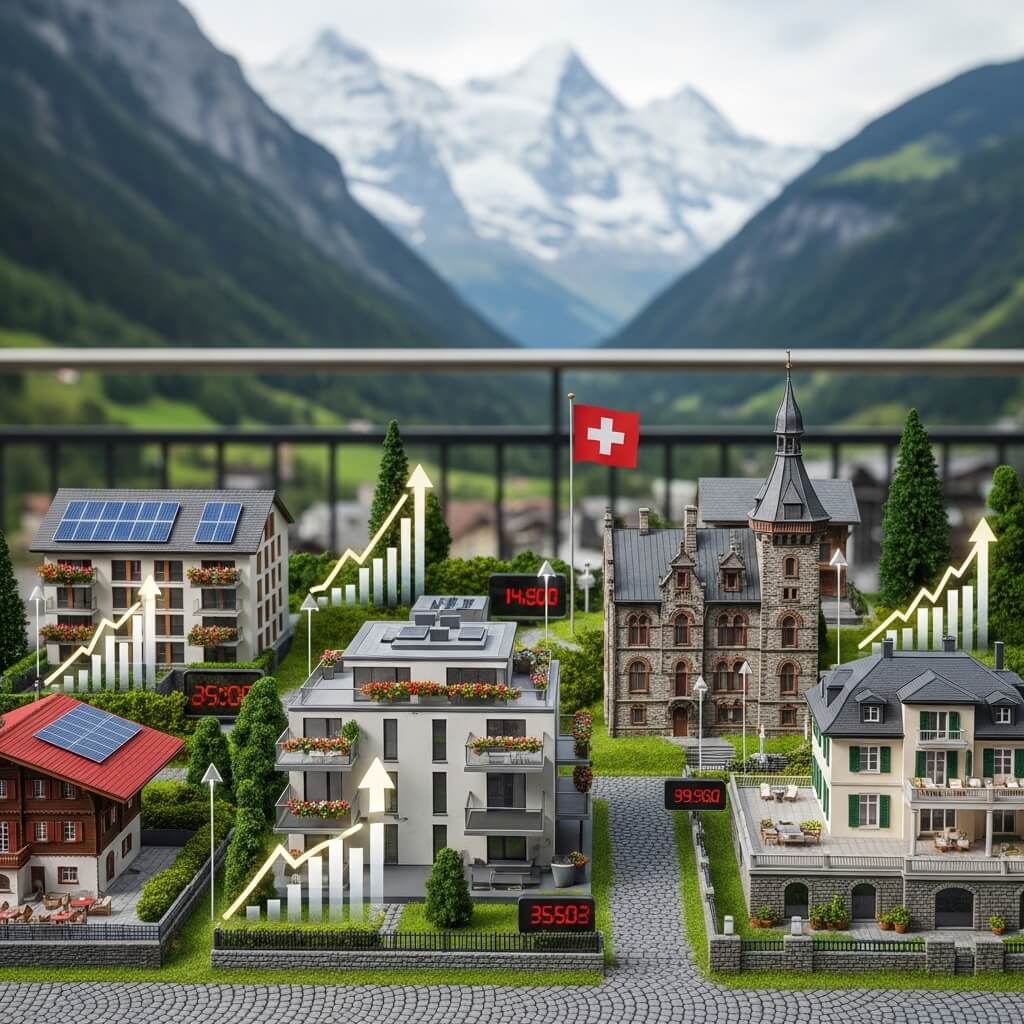
The Historical Safe Haven
Switzerland has long been viewed as a safe haven for investments and assets of all types. It has stood as a neutral country since 1515 and established some of the earliest forms of banking secrecy in 1713. This deep-rooted political and economic steadiness, coupled with the stability of the Swiss Franc, has led to the institutionalisation of a massive wealth management industry.
The Swiss real estate market is a core pillar of this investment universe. However, over the past 15 years, a divergence has emerged: while transaction prices rose approximately 80%, rental prices rose by only about 12%. This yield compression has led some to fear a bubble risk. But is this fear justified?
Yield Context: Rational Pricing, Not Speculation
The Net Initial Yield (NIY) for Swiss residential real estate sits at just above 3.1% on a median basis (as of September 2025). While this figure appears low in isolation, context is essential:
- Risk-Free Rate: The yield on the Swiss Government 10-year Bond stood at just 0.38% in July 2025.
- Financing Costs: The most recent fixed mortgage rate is 1.48%.
When compared against these benchmarks, a 3.1% yield offers meaningful relative attractiveness—it comfortably exceeds the risk-free rate and covers financing costs. The elevated property prices reflect investor confidence in Swiss stability, not irrational exuberance.
Structural Safeguards Against a Bubble
Switzerland possesses strong fundamental barriers that prevent speculative excess and market crashes:
1. Strict Mortgage Regulation
Switzerland’s regulatory framework is a key safeguard. Banks apply a strict imputed interest rate of 5% for affordability assessments and enforce a maximum 80% loan-to-value (LTV) ratio. Crucially, the average Swiss household spends just 13.8% of its gross income on housing costs—far below any distress threshold.
2. Genuine Supply Scarcity
A critical indicator of a bubble is oversupply. In Switzerland, the opposite is true. The national residential vacancy rate stands at a staggeringly low 1.0%. In major hubs, it is even tighter: Geneva records 0.34%, Zug 0.42%, and Zurich just 0.48%. Geographic constraints and restrictive building policies make it unlikely that new construction will meaningfully alleviate this pressure.
3. Demographic Tailwinds
Switzerland has experienced continuous population growth of 28% over the last 30 years, driven primarily by sustained net migration. This structural demographic trend ensures long-term demand for housing remains robust.
Conclusion
Switzerland’s real estate market may appear expensive, yet its high prices are fundamentally supported by low interest rates, strict mortgage regulation, and structural housing shortages. Switzerland remains a safe haven for real estate investment—not a bubble poised to burst.
📥 Read the Full Report
Dive deeper into the data and market trends in our official document: